Wellness vs Illness, Haripriya Suraj, When Spirit Meets Science
energy medicine, modern medicine, reiki, science, when spirit meets science

Wellness vs Illness

Being a wellness practitioner, I am often asked by clients and also by family and friends to cure their physical ailments through Reiki. They hope beyond hope that I can do something to bring their thyroid levels back to normal, to help blood sugar stabilise or even to make cancer dissolve.

When I tell them I can teach them about wellness or support them through Reiki sessions, but not perform medical miracles, some of them look at me like something is wrong with me. I can almost read their mind saying – “What kind of a Reiki practitioner are you if you cannot do any of this?”

I may be a Reiki practitioner but Reiki is not some form of magic! It is not a quick fix for illness or for any problem. And it is certainly not something I can do to make a problem vanish from another person’s life. We are each responsible for our own lives.

Reiki is a way of life that empowers people to create physical, mental, emotional and spiritual wellbeing.

Reiki takes work. Being well in body, mind and spirit may play a role in helping to prevent certain illnesses and also to cope well if at all illness strikes. But if an illness has already set in, wellness therapy like Reiki alone cannot manage it.

For a long time, I had a hard time telling people that there is a difference between wellness and illness. I often felt judged for recommending that someone must seek medical assistance for illness.

While there are plenty of anecdotal accounts of miraculous medical healings and they are certainly inspiring, they are not the same as ‘evidence.’ Evidence is when a particular therapy is proven to have a specific effect on a specific condition, and is accepted as a fact worldwide.

Being married to a cancer surgeon and co-authoring the book ‘When Spirit Meets Science’ with him has helped me clearly understand the difference between anecdote and evidence. This work has helped me appreciate the amount of effort that goes into conventional medical research before treatments are certified and offered to the world. As explained in the book, the principles of evidence based medicine can be easily applied to ‘alternative’ therapies too. Therefore, until we have a more solid scientific backing, I prefer to call wellness therapies complementary or supportive treatment.

Over the years, I have learned to drop the fear of judgment and to not hesitate to tell someone that they need medical evaluation. They are welcome to ask for Reiki but they must also take medical support if required.

Finally, I believe wellness therapies like Reiki offer enough value in themselves and don’t need a medical tag to certify their worth ( unless someone wants to test its efficacy in treating physical illnesses).

A Reiki session can help to relax the body, still the mind and calm the emotions. It can also help one experience the richness of their inner spiritual world. I believe these aspects are also essential components of any healing process. Reiki is always open to anyone who is interested in adopting a holistic approach to healing.
energy medicine, modern medicine, personal, when spirit meets science

Hospitals : Dramatic & Deep Healing Energy Zones

Being a sensitive person, I take care to monitor the kind of content I read or watch and the kind of people I interact with.

I avoid sensational news and only stay updated with whatever is essential to know.

I also limit time spent with people who are into drama and gossip.

I have always been a sensitive person. However, becoming a Reiki practitioner seems to have made me even more sensitive. While the upside to this is that my experience of life has grown richer, the downside is that encountering even the slightest of negative energy in the outside world can take a toll if I am not cautious.

While I do have the choice to monitor the kind of energy I allow into my life, my husband Suraj does not.

Being a cancer surgeon, drama and negativity are routine for him.

Many people visiting hospitals are cranky. If it’s an illness like cancer, it’s even perfectly normal for someone to feel upset or angry about their diagnosis.

However, very often, people lose all sense of reasoning and control, and hospital staff, (primarily doctors and nurses) are at the receiving end of patients’ anger and frustration.

When Suraj comes home from work, I can sense if he has encountered heavy energy in hospital. Further conversation throws light on the kind of human interactions that unfolded during the course of the day. And very often, these encounters are difficult and unpleasant.

While a few patients and caregivers are absolute angels, many are neutral and some are difficult. Not just ‘normal difficult,’ as in when someone is upset for a while and regains their sanity with time. It’s the kind of ‘difficult’ that is always difficult.

In energy healing circles, we refer to this difficult category as ‘people who suck your energy.’ They are the kind of people you may find talking down to staff in restaurants, not giving a damn about societal or civic decorum, or throwing their weight around to show everyone who’s boss; arrogant, haughty and disrespectful in short.

Imagine what may happen when such people receive a difficult diagnosis or need to undergo life-saving surgery? How would they deal with the crisis? How would they interact with the people who are put in charge of their recovery?

The details can be rather disturbing and messy.

While the medical profession is challenging on every level, I personally feel it also offers some great opportunities for growth. It trains you to become thick-skinned when required. It pushes you to do much more than what you may think is possible. It exposes you to all kinds of energy – good and bad, ugly and beautiful- and broadens your perspective on life. It teaches you how to be or how not to be with fellow humans. In a way, it is training for life itself.

I cannot speak for every doctor, for each person is different. But being part of the medical world has certainly made my kind and sensitive partner Suraj thick-skinned. While he relaxes into his softer side in the comfort of home, I feel proud that he knows how to transform into a ‘tough nut’ while at work!

modern medicine, when spirit meets science

First Encounters With Surgery & Life Lessons

Every experience is a teacher. And the greatest lessons are often taught by the people closest to us!

Back in 2007, in the early days of his career as a cancer surgeon, my husband Suraj (then fiance) was also tending to general surgical cases. He was also ‘on call’ a few times every month. This meant he had to attend to emergency surgeries through the night in addition to his routine surgical work during the day.

The hospital he worked for at that time was a high-volume centre. The on-call nights saw a minimum of three or four surgeries lined up for him, sometimes more!

That year was our courtship period. The possibility of us meeting the next day depended on the number of surgeries he had to perform the previous night!

Appendicitis, peritonitis, intestinal obstruction, accident and trauma were the most common cases that came streaming into the Emergency Room.

Suraj was also a mentor for students training in surgery. I marveled at the stamina possessed by him and the team of students. It was hard for me to imagine how these folks could work through the day and then stay up all night performing multiple surgeries!

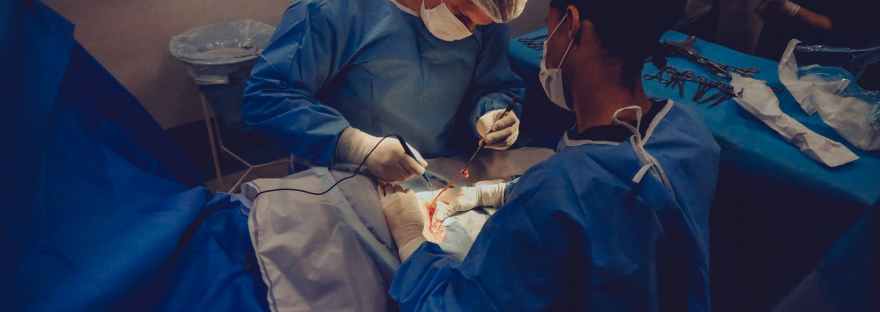
I was even more stunned by the cancer surgeries being performed. For cases of esophagal cancer, a portion of the stomach could be used to create another esophagus. In certain cases of rectal cancer, a separate opening called stoma could be created for the elimination of digestive waste. Often, portions of organs affected by cancer ( such as liver or intestine) would need to be removed and patients would continue to lead a near-normal life after recovering from surgery.

I knew modern medicine had made tremendous progress in the twentieth century. But I had no clue such sophisticated procedures could be performed.

For someone like me, who feels rather nervous at the sight of blood, it was overwhelming yet inspiring to watch surgeons encounter blood, day in and day out.

I also felt it required tremendous courage to cut open another human being and set right whatever had malfunctioned within their body.

Our partnership also brought out some of my own subconscious fears and anxieties around health and blood in particular.

On the spiritual path, we believe that every close relationship acts as a mirror. Partners mirror to us our weaknesses and vulnerabilities.

Being a sensitive person, I am sometimes prone to unnecessary and irrational anxiety. My partner’s courage and rationality serve as a mirror and present to me a choice to work on irrational fears.

What lessons do your dear ones teach you?

Look closely and you may see the mirror they hold up for you!

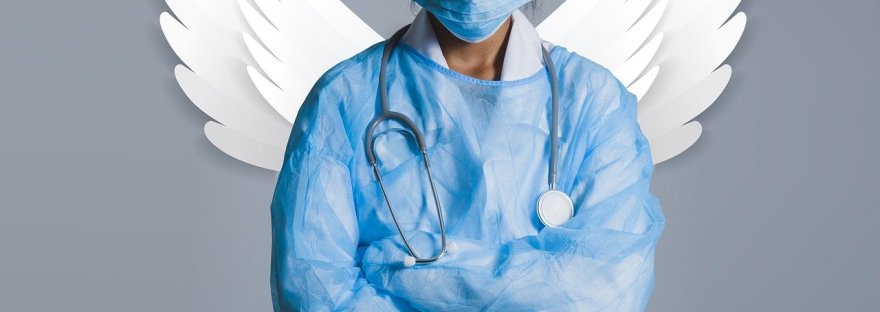
This is an image on angels in healthcare in the work 'When Spirit Meets Science' by Haripriya Suraj & Suraj Manjunath
modern medicine, personal, when spirit meets science

Angels In Healthcare

It was a grim morning in early 2009.

The New Year did not begin on a happy note.

We received the sad news that my pregnancy was in trouble. I had developed a pregnancy-induced life-threatening condition. While nothing could be done to save my baby, modern medicine had the means to save my life. I am eternally grateful to modern medicine for this gift of life.

Letting the baby go felt agonising in every sense of the word.

The process of labour was scary enough. If I had had a baby in my arms at the end of it, all that pain may have been worthwhile.

But going through the hardship of labour, knowing fully well the baby was not going to make it felt tormenting, to say the least.

I was also disturbed by the fact that a young and perfectly healthy woman like me had to encounter an unexpected obstacle within my body.

What made me even more miserable was the lack of empathy displayed by the healthcare staff when I went into labour.

While I was struggling in pain, I could hear the nurses in the adjacent room chatting and giggling away. Not one word of reassurance was uttered by the treating doctor or nurses. I felt it was extremely insensitive on their part. They were probably used to seeing labouring women every day and it may have been no big deal to them. But to the women going in there, experiencing that threshold of pain isn’t an everyday experience.

I fell into a deep sleep after delivering my angel baby.

I was woken up the next morning by a flurry of activity in the ward. The light came streaming in through the windows. When I opened my eyes, I felt a gentle presence beside me.

A young nurse with kind eyes was trying to communicate with me. She adjusted my blanket and stroked my forehead. She also told me in a very kind voice to forget about everything that happened the previous night.

From a psychological standpoint, I wouldn’t call that the best piece of advice, for how can one forget everything that happened.

We had lost our baby and I think it was perfectly normal to grieve.

But the fact that this nurse saw me as a human being and not just another patient in the ward touched my heart.

The fact that she cared enough and wanted to help ease my pain was good enough for me.

To this day, I remember her kind face peering down at me that morning.

Though I was in a semi-conscious state, her gesture left a deep impression on my soul.

Had she been in the ward when I went into labour, things may have been very different.

I wish her well and am grateful for the kindness she showed when I needed it most.

This article is dedicated to all the Angels in Healthcare who go that extra mile to make a positive difference in the lives of their patients.